If you have received a link to this website, you or your loved one has been diagnosed with an acute ischemic stroke and may be eligible to participate in a clinical research study.
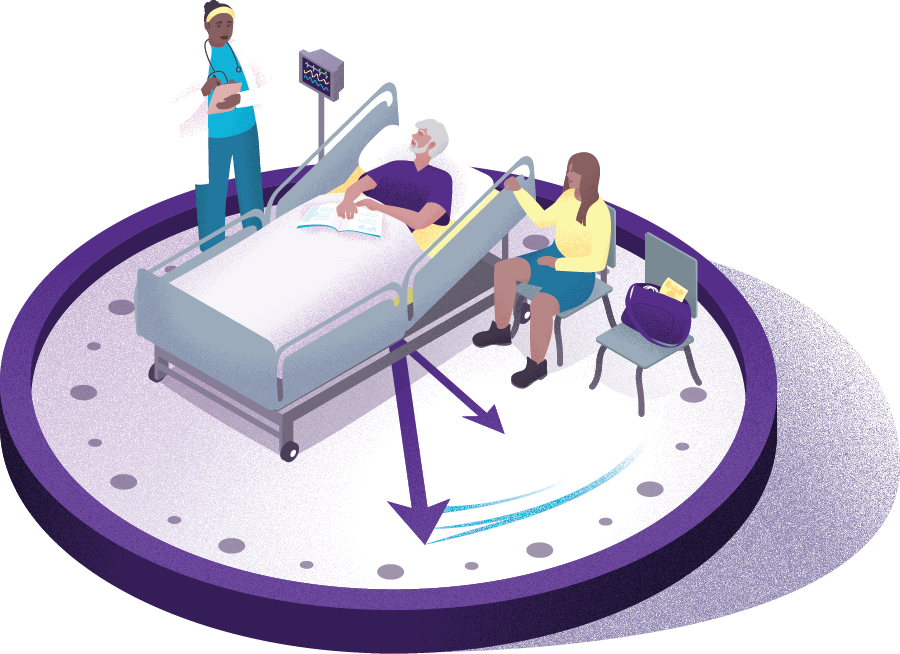
Every minute matters in Stroke Care
An acute ischemic stroke can change everything in an instant—and every moment after matters.
That’s why researchers are evaluating an investigational treatment, given along with standard-of-care treatment, to advance stroke care. The goal? To see if the investigational treatment can potentially reduce the harmful effects of an ischemic stroke. See if the VELOX Study is right for you or your loved one.
Understanding your stroke and this research study
Watch this video about acute ischemic strokes and this clinical research study so you and your loved one can better understand what to expect.
About acute ischemic strokes
An acute ischemic stroke happens when blood flow to a part of the brain is suddenly blocked, usually by a blood clot. When this happens, brain cells in the affected area can’t get the oxygen and nutrients they need. Depending on which part of the brain is affected, there can be sudden changes in how the body works.
Here's what each word in “acute ischemic stroke” means:
Acute: This means "sudden,” or something that happens quickly rather than developing slowly over time.
Ischemic: This means there is a lack of blood flow, and a body part is not getting enough blood and oxygen.
Stroke: This is when part of the brain stops working properly because it's not getting the blood it needs.
Time is important when treating stroke. The faster treatment begins, the better the chance of recovery and of reducing long-term effects.
About the VELOX Study
This research study is evaluating the safety and effectiveness of an investigational treatment for acute ischemic strokes.
The investigational treatment is not currently approved for the treatment of acute ischemic strokes but has been approved by the U.S. Food and Drug Administration for the treatment of other conditions.
All participants will receive standard-of-care treatment (the treatment that doctors normally use to treat acute ischemic strokes) while participating in the study.
What would participation in the VELOX Study involve?
Study treatment:
You or your loved one would receive either:
The investigational treatment + standard-of-care treatment
Investigational treatment: a treatment that is not yet approved for the treatment of acute ischemic strokes that is being tested through clinical research
OR
A placebo + standard-of-care treatment
Placebo: a substance that looks like the investigational treatment but does not contain any active ingredients
Hospital stay:
Participants are required to remain hospitalized for at least 48 hours after receiving the study treatment. Those who qualify for and join the study will receive the study treatment and study-related exams, tests, and procedures beyond standard care for stroke at no cost.
Follow-up visits:
After receiving the study treatment, participants will undergo assessments through approximately Day 8. These may be in-person or remote assessments, depending on whether participants remain hospitalized and the visit requirements.
One visit will take place approximately 30 days after receiving the study treatment (will be done in person or by phone or video).
Last visit will take place approximately 90 days after receiving the study treatment.
Total duration:
Approximately 90 days.
Why participate?
By taking part in this clinical research study, you or your loved one can:
Potentially access an investigational treatment for acute ischemic stroke in addition to standard-of-care treatment
Contribute to advancing stroke research and treatment options for future patients
Your participation matters—because research needs people from all backgrounds to find better treatments for everyone.
As a participant or caregiver, you have the right to:
Receive standard-of-care stroke treatment regardless of study participation
Ask questions at any time
Discuss this study with your loved ones (though due to the time-sensitive nature of stroke treatment, a decision is needed quickly)
Refuse to participate without affecting standard medical care
Withdraw from the study at any time, even after agreeing to participate
Next steps:
If you are interested in learning more or participating, speak with the research coordinator, who can answer your questions.
YOU ARE NOW LEAVING THIS WEBSITE
You are now leaving VELOXStudy.com and being redirected to a website that is not operated by Clinical Trial Media Inc.